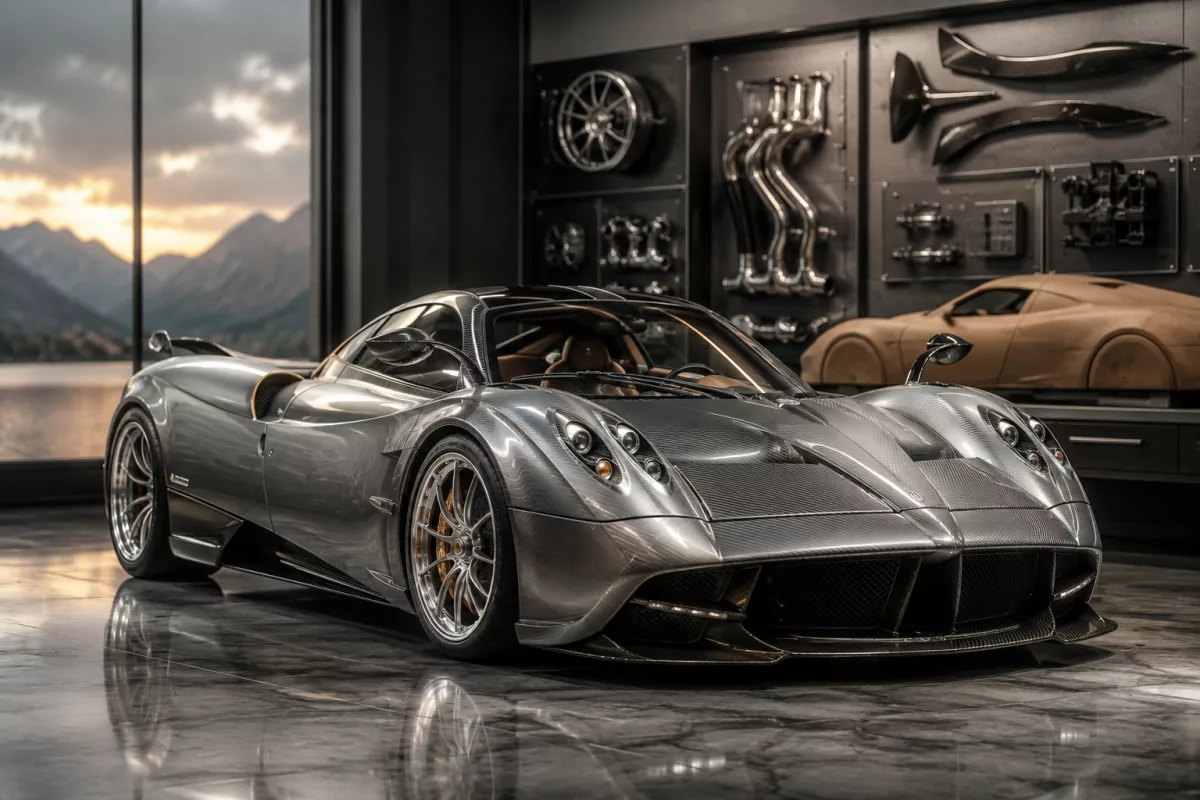
Well, there are cars and then there are Paganis. In my opinion, when I talk about the ultimate automotive masterpiece, Pagani Automobili is definitely the first thing that comes to mind. Of course, it's not about the speed and power; there is enough of both. But it is more than that because Paganis represent philosophy, dedication to perfection and beauty, engineering and meticulousness that can only be found in very few companies in the industry.
Indeed, I think it is fair to say that right from the very beginning, Horacio Pagani, the brain behind the brand, was determined not to build just regular cars but rather some sort of sculpture that happened to move extremely fast. And I think he did a wonderful job.
The Visionary: The Dream of Horacio Pagani
Well, let's take a look back and see where it all began. The Argentinian-Italian engineer, Horacio Pagani, had a dream since he was very young. It wasn't enough for him to design fast cars – he wanted to create something special, combining the perfect mechanics of engineering with the aesthetics of fine arts. Isn't it quite inspiring?
Moreover, he built his own first vehicle, a buggy, using leftovers when he was only 20 years old! His path eventually led him to Lamborghini, where he headed the composite materials department. This experience was especially important for his later works because of carbon fiber. He realized its incredible potential very early, and honestly speaking, it was a real breakthrough.
Starting Pagani Automobili and Creating the Zonda
In 1991, Horacio made the decision that it was finally time to create something of his own and started Pagani Composite Research. Just one year after that, Pagani Automobili S.p.A. was founded, marking the beginning of the creation of the Pagani's first production automobile, the Zonda. I can only wonder at the sheer amount of guts and inspiration it took to create a new hypercar company and compete against already well-established companies.
As soon as the Pagani Zonda hit the streets back in 1999, everyone was baffled by its appearance. Seeing the pictures of this car for the first time and asking oneself "What is that?" is something very natural in this case due to the incredible bold and innovative design of this machine with the quad exhaust pipes, the luxury space craft interior and much more. But under the hood of such an unusual body is a Mercedes-Benz AMG V12 engine which is still being used today by Pagani cars.
The Legacy of the Zonda: A Dance of Carbon Fiber and Performance
Zonda didn't just look fast; Zonda was fast! The range of variants, from the initial C12 to the more extreme versions such as the Zonda R and Zonda Cinque, were all about performance. But for me, what set the Zonda apart was its sheer presence. It looks like it could go 200 miles an hour while sitting still!
For me, what makes the Zonda special includes the following things:
- Weave of Carbon Fiber: The use of the exposed carbon fiber weave that was lacquered was not only a structural element; it was aesthetically pleasing as well. They actually matched the weave on other parts of the body of the car. Yes, I love that kind of attention to detail!
- Interior Workmanship: Sit down inside a Zonda, and you are met with finely finished leather seats, brushed aluminum, and more carbon fiber. The switches and the dials inside the cabin were masterfully put together.
- Engine: The naturally aspirated engines provided by AMG were pure power monsters.
- Aerodynamics: Early Zondas had obvious design elements in them to reduce drag and create downforce.
This car became a legend, and even today, many years since the last Zonda came out of the factory, there is an enormous interest in custom Zondas.
Huayra Era: Development and Active Aerodynamics
After such a great success of the Zonda, the world was waiting for the new car by Pagani with bated breath. In 2011, Pagani released the Huayra. Wow!
The Huayra was an entirely different beast. The classic design of Pagani was taken to another level because the car featured the active aerodynamics. I still remember when I watched videos about how flaps on the sides of the car opened up at high speed.
Innovations of the Huayra:
Active Aerodynamics: The car uses active aerodynamics with four flaps on the front and rear end which are controlled separately to optimize downforce and air-braking, enhancing its stability and performance. It's almost like you have a co-pilot controlling air-flow for you.
- Twin-Turbo AMG V12: Pagani used the new Twin-Turbo V12 from AMG. Though some purists missed the naturally aspirated engine, the power and torque produced by this engine were not to be doubted. You can feel every bit of this boost.
- New Design Language: Even though the design of the Huayra was more refined than the Zonda, it maintained the unique Pagani style in itself. The 'gull-wing' doors were a nice addition too!
- Unparalleled Attention to Detail: The Huayra inherited the unique craftsmanship from Pagani even further: from the titanium exhaust to the mechanisms inside the car – everything is built with the utmost attention to detail. And yes, even the screws have the Pagani logo on them.
Variants such as Huayra BC (which stands for Benny Caiola, the first customer of Pagani) or roadster versions of Huayra took the performance level of the car even higher.
The Pagani Experience: The Experience of Being Part of the Club
Having a Pagani goes beyond simply being an owner of a car because one becomes part of the family. It really does sound like an amazing experience from what I have heard from various owners.
- Factory Tour: Getting a tour of the factory located in San Cesario sul Panaro, Italy, will be an amazing experience. It's clean, modern, and at the same time looks like a high-tech workshop that is full of artisans making these beautiful cars.
- Personalization: All Pagani cars are customized for the customers, who collaborate with the factory regarding all the details, including the type of carbon used or the stitching design inside.
- Community: Various events and drives are organized for the owners to ensure there is a community feeling among them.
The Latest Edition: The Utopia
The year 2022 saw the introduction of the Pagani's third model, the Utopia. Coming after the Zonda and Huayra models, the Pagani Utopia had high expectations to meet. From what I have seen so far, I do not see any reason for complaint. The car seems to be an intelligent evolution, integrating old features and introducing new ones at the same time.
From what I understand, the Utopia puts emphasis on an analog driving experience by providing both a manual gearbox and an automatic manual one. On top of that, the car comes with a monster twin turbo V12 engine putting out over 850 horsepower. While the design appears more elegant and minimalist than ever before, Pagani has maintained that characteristic feature of its cars - the unique quadruple exhaust system.
What Sets Pagani Apart from the Rest
Now, what makes Pagani different from other car manufacturers, considering there are many other brands making excellent supercars today? To me, it is their dedication to the initial vision of Horacio – the combination of science and art. They do not skimp on anything and put everything together flawlessly.
Each and every Pagani vehicle looks like a product of handmade craftsmanship. There is precision, exotic materials, daring design – all of that comes together to make an outstanding vehicle. It is a brand that shows us how the work of an engineer can be so personal and artistic, producing a machine that is much more than just transportation.